Day 29 Parque da Sierra da Estrela to Cascais


Day 29 Parque da Sierra da Estrela to Cascais. February 8th

It was a frosty start this morning in our olive grove, despite the sunshine. Taking a shower with an air temperature of 2 degrees involved some degree of stoicism, despite the hot water. Howard noted that the swimming pool on the site had frozen over.
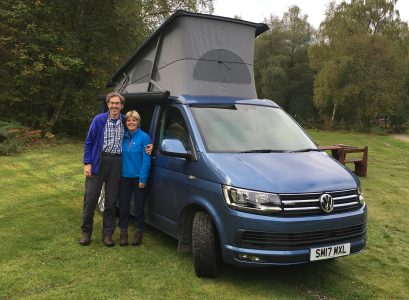
We ate the last of our Scottish porridge for breakfast, then packed up Oscar. We bade a fond farewell to our hosts, and felt quite sad to be leaving such a wonderful location. The first part of our drive involved meandering through the Estrela National Park, the highest in Portugal. We came across the charming town of Gouveia, which had the traditional tile name plaques of itself, and also all the little villages in it’s environs on a long wall at the top of the town. It was then a slow drive on to Coimbra, an ancient city renowned for it’s university. The university buildings certainly dominated the city, standing high on the hill. Students thronged the squares and cafes, some of them dressed in their black gowns. It reminded us a little of St. Andrews, where students take great pride in wearing their red gowns around town. We had a coffee in the large central plaza, then had a quick wander through the Botanic Gardens. We were amused by eight male gardeners who stood gesticulating and bickering very loudly by a pond. It seemed they were arguing as to whom should pull the plug to drain it. One older fellow thrust his hand in, then yelped like a small child. We thought perhaps there was a snake in the water, but no – a younger guy just put his hand into the brackish water and pulled the bung. What a fuss over nothing!
We then headed on to our afternoon stop of the day, an absolutely charming old Moorish town called Obidos. It sits on a hill, and is surrounded by the old walls, and just outside the periphery runs an impressive aqueduct which remains intact to this day. We wandered through the tall stone archway into the old town, and Howard was keen to take a walk along the old city walls. I blindly followed, but rapidly realised that health and safety is not something the Portuguese seem to care for. The walkways were narrow, very cobbled and uneven, and there was absolutely nothing to prevent you falling a hundred feet or so off the other side. Although the views of the town, with it’s old castle and churches was spectacular in the bright sunshine, I began to feel increasingly uneasy about our afternoon walk. The walkway then abruptly came to an end, our way barred by a wooden barricade, and the only escape was down a ridiculously steep set of stairs carved in the rock, which for the last twenty feet petered out completely, leaving you to rock climb down to the path. After that piece of excitement, I insisted on another cafe stop to calm my nerves, looking out over the colourful yellow and blue painted houses. Walking down the narrow main street, there were several old bookshops, and apparently the town has started hosting a yearly literary festival. So despite my protestations at the time, I must say that Obidos was an absolutely charming town, and well worth the visit.
By now, time was getting on, so we hit the motorway for the last sprint down to the coast. We have settled on a site not far from Lisbon, and will stay here a couple of days, perhaps do some cycling, and possibly visit some other sites before hitting the capital itself. Howard is getting the evening off cooking tonight, and we plan to eat in the campsite restaurant. Hopefully their menu will match his increasingly high standard of cuisine!

Day 28 Parque Naturel da Sierra da Estrela

This place is a gem. Authentic rural Portugal – just our sort of place. We woke up to birdsong and sunshine, although it had been bitterly cold overnight, due to the high altitude and clear skies. The owners had kindly left out for us six freshly laid eggs from their hens. After breakfast we chatted with the lady in reception, who told us that the German campers who had been here earlier in the week had left because it was too cold for them. We explained that we came from Scotland, and that it was positively balmy. We purchased some of her home pressed olive oil, although sadly could only fit the smallest bottle into our camper van cupboard.
We then donned our walking boots and set off for our trek. The first part of the walk was very pleasant, through a little village called Melo. Apparently a famous Portuguese poet had lived here, and here was a literary trail around the places in the village that had featured in his poems. We even stopped and had a quick coffee in the sunshine, admiring the view over the National Park. It was a very picturesque place, with little cobbled lanes and pretty white-washed houses. The street names were marked by beautiful ceramic plaques in similar colours to many of the tiles we had seen. The next part of the walk was rather more strenuous – it was a bit like Portugese munro-bagging! I was duped into thinking it was a short walk to the next village – but hadn’t appreciated that we were heading for a medieval hill village, that was up a very steep and never ending hill. It took us a good couple of hours to walk the few miles uphill to Folgosinho. As we walked, we passed olive groves planted on the hillside terraces, and noted that in many areas there had been fairly recent forest fires, scorching the shrubs and trees. Although it was bright, there was still a definite chill in the air, and for the first part of the walk, we wore gloves and scarves. Bit by bit, however, I slowly peeled off layers of clothes, as I got warmer and warmer with the constant uphill climb. At one point, in the very far distance, I spied a hill town with terracotta roofs and a tall tower at it’s peak. I hoped against hope that this wasn’t where we were heading. But of course, it was! Eventually, I puffed and panted my way up through the stunning quartz cobbled streets, past the old church and the fountain, and up to the tower. I must say that the views were absolutely sublime, but it took me several minutes of catching my breath to really appreciate them.
We found a tiny cafe /bar as we walked back through the village. Initially it looked closed, but then we heard voices. It turned out to be a charming little place – and to my delight, lined up on their shelves was a bottle of Hendrick’s gin. As tempted as I was, I decided that it was still too early in the day, and we also had the long walk back to the campsite. However, I immediately warmed to a place, that in the middle of seemingly nowhere, was stocking one of my favourite tipples.
We route-marched back to Oscar, virtually all downhill thankfully, and Howard is quite delighted to have exceeded his silly step count by nearly ten thousand. We are now sat collapsed, drinking tea, and planning our next few days. We will probably head south, towards the coast again, where it is looking much warmer. In the meantime, I think we will be having Portugese omelette for tea.

Day 27 Aveiro to Parque Naturel da Sierra da Estrela

We woke to gorgeous sunshine, and a near deserted campsite. One of the advantages of camping in winter, is that most of the campsites have been almost empty. The majority of those other campers we do come across are in larger motorhomes, who have their own showers and toilets, and so by and large, Howard and I have had the washrooms and showers to ourselves thus far. This morning, I tried one of Howard’s tricks. I had my shower as usual, then quickly shuttled into the adjoining empty shower cubicle, which was completely dry, in order to get dressed without making everything wet from the floor. Clearly once there are more campers around, I will have to stop the ‘two shower’ habit. But for now, it works well.
As we drove back past Aveiro this morning, from the main road we spied hundreds of birds on the flat marshes stretching out towards the estuary. So we back-tracked on ourselves, and went to do a bit of bird-spotting. The area is renowned for bitterns, but unfortunately there were none to be seen. We did, however, spot a number of egrets, herons, many unspecified waders (too far away to identify, even with binoculars), and later three storks sitting on their nests.
We then headed inland towards the medieval city of Viseu. We stopped for coffee and a pastry (you can see there is a theme developing here!), then set off on a mission. Since being in Europe, we having been using huge quantities of our data allowance, since on most of the campsites, the WiFi has either been non existent, or too weak to connect to our computers. On the advice of a friend, we did purchase a 3 MiFi before leaving the UK, but likewise, we have been eating up our data quota at an alarming rate, partially due to transferring text and photos to this blog, and also, I am sure, due to Howard’s weekly fix of streaming ‘Call the Midwife’ off iPlayer! We had a second MiFi provided by our phone provider sold to offer us internet in the continent. However, having not managed to get it to work at all since leaving Portsmouth, our UK provider emailed us back today rather red-faced to say that the reason that we couldn’t get it to work was simple – it does not work abroad! So we were in search of a computer / phone store to see if a local sim card might work in it. In the process of searching out some help, we meandered our way all through the old quarter of the delightful city of Viseu, with it’s cobbled streets, charming squares and tile-festooned houses and walls. We did find an extremely helpful lady in a phone shop, who tried every solution possible to get our MiFi to work with a local sim, but to no avail. The only solution would be to buy a new router in each country we visit, which would prove very costly. So, for now, we are stuck with using my phone as a hotspot, using campsite WiFi wherever possible (the one here tonight is again not working), or just being extremely frugal with the remaining data allowance I have from the only working 3 MiFi. I say all of this because it is quite likely in the near future, I may run out of WiFi, and may have to wait until we either check into a hotel again or find a Costas to post the blog.
Yet again, though, we were truly impressed by the helpfulness of the locals – they really seemed to go the extra mile to try to resolve our problem.
We have now arrived at our campsite for the next two nights – a complete contrast from the large pristine facility by the coast we spent last night. Oscar is parked up in the middle of an olive grove, with views over the countryside to the Sierra da Estrela mountains – just gorgeous! We are the only ones here, the staff are charming, and tomorrow we plan to do some walking in the National Park.
My tea is now ready – garlic bread, tomatoes and vegetarian pasta, and my wine is poured. Good old Howard, alias 2 pot chef!

Day 26 Porto to Aveiro

This morning we overslept! One of the problems with having both internal and external toppers on our van is that it makes the ‘upstairs’ very dark. Although they undoubtedly keep the van nice and snug, and reduce condensation, we are just not used to sleeping in the pitch dark. At home, we seldom pull the curtains, mainly because we love waking up to the view of the river. So generally, except in the depths of the winter, at home in Scotland the light of dawn wakes us up. But we have noticed that on this trip, we are starting to sleep in later and later. Clearly my purchase of an uber expensive upper mattress topper has also contributed to our comfort. Howard even suggested this morning that we will need to start setting the alarm, heaven forbid!
Anyway, once up and breakfasted, we considered our options. We decided to continue down the coast a little way to a town called Aveiro, muted to be the ‘Venice of Portugal’, due to it’s network of canals, high prowed boats and humpbacked bridges. It sits on the Ria, a shallow coastal lagoon, renowned for it’s bird life, and our guide book promised a lively waterfront and boat trips. Rather missing our weekly fix of skiff rowing, we thought a ride on the canal might improve us.
The sun was shining as we arrived at the waterfront, and we were directed into our parking space by the local ‘direct you to your parking space man’ (unemployment is apparently low in Aveiro we were told later by our boatman, maybe due to this example of job creation). First, we enjoyed a pleasant coffee in one of waterside cafes.
The boats on the canals are called ‘moliceiros’, and were traditionally used for harvesting seaweed from the lagoon for fertilising the crops. With the demise of the local seaweed industry, once agrochemicals took its place, the boats were transformed into tourists attractions for the town. On each of the boats the bow and stern are colourfully decorated in pictures which seem to fall into three categories – traditional (fishing, nautical and the like), religious, and plain saucy, rather like rude postcards you might see at an English seaside resort. Quite strange! The local boatmen seem to be multilingual, and give an informative commentary about the local history as you wind your way along. These days the boats are powered by diesel engines, so it is not quite as romantic as riding a gondola in Venice, nor, if I am frank, not as picturesque. However, it passed a very pleasant hour and we both enjoyed it. We did notice, however, that whilst Howard and I were dressed just in fleeces, everyone else was huddled up in thick overcoats and wrapped their legs in blankets. Clearly the skiff rowing and living in Scotland has made us hardy souls!
Another town, another culinary speciality. Aveiro is famed for it’s Ovos Moles – a sweet egg yolk and sugar mix of confectionary. So we couldn’t leave without sampling some. I fear Howard and I will not be able to fit in Oscar soon, if we don’t stop eating cake!
We then meandered our way down the coast for a few miles further along the lagoon to our campsite for the night. The lagoon reminded us a bit of Chesil Beach, with the sheltered fresh water lagoon in it’s lee, and just a few hundred yards westwards, long stretches of sandy beaches being battered by huge waves and a fierce onshore wind that made it hard even to stand up. The coastal communities along this stretch seemed rather characterless. Row upon row of holiday houses, some painted in nautical blue and white stripes, but nearly all deserted. In fact, we hardly saw a soul all the way to the campsite.
The land all along this part of the coast is as flat as a pancake, and I must admit that Howard and I are starting to miss the mountains. We had planned to stay a day or two and do some cycling, but we are now considering venturing inland to one of the National Parks. Deserted seaside holiday villages aren’t really our bag, and neither of us are that partial to sand!

Day 25 Porto


There is a famous ‘Chinese proverb’ – ‘Ye who carries the custard tarts back from Porto, gets to eat them’. This first remark is addressed to Howard!


Woke up to blue skies and sunshine – hoorah! After breakfast, we set off on the bus to Porto, Portugal’s second city. The ride in itself was quite interesting. At the stop after ours, a family of four alighted – mother, father, two little boys carrying eight enormous bags – two gigantic suitcases holdalls, and laundry bags crammed with clothes. It was as if they had all their possessions in tow. We wondered if perhaps they were moving house. The bus wound it’s way initially along the Atlantic Coast, past little resorts of white holiday homes with bright orange terracotta tiles. The beaches were sandy with massive waves, no doubt good for surfing, but the whole area seemed to lack character, unlike the rugged charm of the Galician coast we had seen the day before. We passed a huge refinery with gas storage tanks, and then passed the docks with thousands upon thousands of stacked containers. At this point, our family of four alighted. So we were left completely bemused as to where they were going with all that luggage.
The bus dropped us off by an attractive park at the top of Porto, with strange trees with bulbous trunks, and a profusion of modern statues. We walked downhill to the attractive Ribiera area of the city, sitting on the banks of the Douro River. All was good with the world as we sat and had our morning coffee in the sunshine, watching the crowds of people wander along the Cais de Ribiera, the waterfront promenade. As it was a Sunday, many families were out enjoying a bright, but chilly amble along the banks of the river. Howard sampled one of the local delicacies, a sort of cod rissole.
Refreshed, we continued to wander along the promenade, taking in the stunningly beautiful old buildings, many covered in brightly coloured tiles or Azulejos. It is clearly ‘the thing’ in Porto to festoon your property in these gorgeous ceramic tiles, and we noted that even many of the modern buildings had their walls adorned with them. Many of the Artisan shops appear to be selling tiles also, along with many textiles covered in fish and cockerels.
Further along, we crossed the famous metal Pont de Dom Luis 1 bridge, built by a student of Gustave Eiffel, which spans the Douro, and leads you into Vila Nova de Gaia, the riverside area renowned for it’s port cellars. All along the riverbanks are huge warehouses with names such as Graham’s, Taylor’s, Croft’s and Calem. Attractive gondola type craft are moored on the banks, most loaded with large port barrels, presumably as a form of advertising for their cellars. Boatmen tout trips along the river, with port-tasting, but at this point, something more interesting had caught my eye. Porto and Lisbon are famed for their Pastel de Nata, a type of cinammon flavoured custard tart – and here was a stall selling hundreds of them! We bought two, a plain custard one, and an almond one – both absolutely delicious. I pleaded for more, but Howard insisted we walk further before I could be rewarded with more sugar! Needless to say, on the way back we bought four to take back to the campsite, two for our dessert, and two to keep in the fridge for ‘emergencies’!
We then followed the walking tour from our guide book up through the city, taking in the cathedral, the famous statue of Henry the Navigator (who sponsored Portuguese exploration) and the most amazing railway station, the walls of which are covered in the most beautiful tile collages. It was really strange to watch passengers disembarking from their trains, stop in awe at the works of art before their eyes, and then take a quick photo on their phones before carrying on with their journey. Our final stop of the day was to climb the Torre dos Clerigos, a 225 step tower that has unrivalled views over the tiled rooftops of the city. Howard was keen to invest in some port, but the booze shops all seemed to be closed, so we will save that for another day.
Now back at the campsite. Had tasty frittata with ratatouille for tea. Howard is washing up while I type the blog. Pudding will be one of our delicious Pastel de Nata – hurry up Howard!

Day 24 Finisterre to Porto, Portugal


Before recounting our day, I just wanted to say how much I appreciate everyone who has contacted us, either via text, What’s App or email since we have been on the road. The way the blog works is that I have no idea who is looking at it, so it is really nice to get some encouraging feedback, be sent photos from the rowing club, or just to hear the local gossip. The award for the positively most entertaining contact to date has to go to my ‘photo girls, who, whilst celebrating Burn’s Night, took the time to record me a superb video of their antics. So thank you very much – it really made us both laugh (and most of the Tapas bar too!).
The day started badly. Having spent two nights in a hotel in Santiago de Compostela dodging the rain, we set off early to retrieve Oscar from the underground car park where we had left him. The hotel car park had a height limit of 1.89 metres, and since Oscar is 1.9 metres, the hotel assured us it was OK to leave him in a near-by municipal car park. As we arrived at the ticket machine, Howard inserted the card and it read ‘error’. He tried again – still ‘error’. It was only at this point that I noticed the notice saying ‘Maximo 24 Horas’. Shit, shit and double shit! We had visions of spending the weekend in an underground car park with our little van. Fortunately we managed to find a kindly man at the exit, who I think took pity on us, and we eventually negotiated our escape for 20 euros. We both chastised ourselves on our appalling parenting skills (although Howard

did point out that he had checked on him five times!), and vowed not to leave him alone again.  So not a great start to the day.
Having left Santiago, we headed west to Finisterre, the most westerly point in Spain. As we drove, the weather got worse and worse – stair-rod rain and glowering black skies. As we arrived at the fishing port, the rain was still lashing down, and the fishermen who had just dispatched their catches at the fish market stood huddled in lines inside a local cafe, looking out of the window and sheltering from the appalling weather.
Undeterred, we parked up by the harbour and put the kettle on. After a cup of tea and a hearty bowl of porridge we felt more ready to face the world. In need of a comfort stop, we stepped into the cafe, which seemed to house the entire male population of Finisterre, (by now drinking wine), and asked for two coffees. When I came back from the loo, Howard was sat at a table with two coffees, and two rather unappetising bowls of a strange looking white bean and fish stew, which were apparently complimentary with the coffees. A rather different take on a little almond biscuit that you might get offered in the UK, and certainly not something I fancied at 11am. Needless to say, Howard dutifully imbibed the stew, and spent the rest of the afternoon requesting mints to take the taste away.
We continued on to Cape Finisterre, and it’s famous lighthouse. Many of the pilgrims on the Camino de Santiago continue on to this most westerly point, as an extra addition to their trek. As we walked down to the lighthouse, the rain eased and there was a biblical break in the clouds, and the sun started peeking through. We walked to the furthest point over the rocks, and saw several pilgrims sitting or standing looking out to sea in contemplation. Some of them had balanced small stones on top of larger rocks, just like people do in Scotland on cairns at the top of mountains.
Walking back to the car, we considered our options. Last night we had planned on staying just a little further along the coast by the beach in Galicia. However, the brooding dark skies made a stop at the seaside seem less appealing. We quickly googled the weather further south, and it looked much better. So we took the decision to travel on a little further into Portugal, in the hope of finding some sunshine.
The drive down the autoroute was truly grim. The clouds were so low, that at times we could barely see the road. Throughout driving along the north Asturian coastline, and now driving down through Galicia, we had been impressed with the structural engineering feats – multitudes of viaducts taking the main roads over deep valleys, as the coastline dipped and dived from high cliffs to sheltered inlets. The Spaniards helpful name all these viaducts, and also tell you how high they are. The highest one we traversed was 600 metres tall – I chose not to look over the edge as we drove across!
Eventually we crossed the border into Portugal, and made our way to one of the coastal campsites just above Porto. The rain eventually eased, and we had a quick stroll down to the Atlantic, before putting Oscar’s covers on, and coming inside to cook tea and have a glass of wine.
We have really enjoyed our time in Northern Spain. We have witnessed some wonderful scenery, explored some historic towns, but in particular, we have been impressed by the kindness and helpfulness of the all the local people we have met.
Tomorrow, we plan to visit Porto, our first experience of Portugal.

Day 23 Santiago de Compostela

We have spent today wandering around Santiago de Compostela, a welcome break from driving for Howard. First thing though, we went to check on Oscar, and say good morning to the boys (or to clarify, to the ridiculously large canvas photo print of the family that Thomas gave us for Christmas). It was a chilly morning, it had been raining again overnight, and we set off on foot to explore the old part of the city. Our Lonely Planet guide book states, ‘locals say the arcaded streets of Santiago de Compostela are most beautiful in the rain’, and if that’s the case, then we saw it at it’s best – since it showered on and off all day long. When the sun broke through, however, the old stone buildings and squares glistened from their thin covering of water, and did add a certain atmosphere to the place.
First thing, there were few people around except locals going about their daily activities. We walked along to the cathedral, which is famed for it’s magnificent facade. Unfortunately, this facade is currently covered in a mass of scaffolding, so it is only the side towers that are clearly visible. We sought out a side entrance and had a quick look around. There was a mass going on, and the sound of organ music resonated round the building. This is the final destination of the thousands of pilgrims who walk the Camino de Santiago every year, a 783km trek if walked in toto, from France, across the Pyrenees, through Rioja, Castilla y Lyon and Galicia. Pilgrims have been making this trek for more than a thousand years to walk to the tomb of St. James the Apostle in Santiago.
Our first visit was brief, since we had left the hotel without breakfast. So we sought out a tiny cafe in one of the lanes, and enjoyed a coffee and croissant surrounded just by locals enjoying their first coffee of the day whilst reading the newspaper.
Feeling refreshed after our caffeine-burst, we set off with map in hand to explore further. We returned to the cathedral, by now getting busier, to have a proper look around, and see the remains of St. James in the crypt. Rather disappointingly, if you wanted the light a candle in the cathedral, you had to insert coins into a form of slot machine, which would then light up an electronic candle on the display. So not quite the same atmospheric effect as real flickering candlelight, and a touch commercial too! Outside the cathedral was a Galician bag-piper busking – the pipes quite similar to Scottish bagpipes, but with a slightly higher pitch. It reminded me of one of our friend’s son, who often busks in Dundee with his pipes. We crossed the grand large square in front of the cathedral, criss-crossed through narrow passageways into beautiful little squares, lined with camellia trees in bloom, and had a walk through the park. I was surprised to see so many familiar birds in the park – blackbirds, robins, blue-tits and coal-tits, as well as a few less common ones such as black-caps. There were daffodils in bloom, and catkins on the trees – signs of spring many months away in Scotland. We came across the statue of ‘the two Mary’s’, built to commemorate two local eccentric women who took delight in walking through the park every day to taunt the local students.
We stopped again in a brief spell of sunshine, and sat outside a cafe. Howard decided to go native and sample the Spanish delicacy of churros – warm lengths of sugary doughnut and gloopy hot chocolate. Yummy!
By now some walkers had started to arrive outside the cathedral, most carrying a shell and a staff, which is apparently de rigueur for a pilgrim. Our last bit of culture for the day was to visit the Benedictine Monastery and it’s museum. I’m not generally great on museums, but this one was actually quite interesting. The monastery had it’s own printing press, consisting of intricately carved wooden blocks used as stamps. The workmanship involved in producing these was extra-ordinary. They also had a pharmacy, natural history section and human anatomy section, the latter displaying a hand-made anatomical model of the human body built in 1879. Another joy of the museum, was that apart from one other soul, we had the whole place to ourselves.
My general impression of Santiago de Compostela is generally favourable. I loved the old city, but perhaps found it more commercial than I had hoped. The wonderful old buildings and arcades were definitely marred by a collection of souvenir shops selling tacky religious memorabilia, but I guess you find that the world over. The local people though are charming – very friendly and accommodating, and the city has a vibrant vibe about it.
For now, though, I am Santiago de Compostela’d out! Howard has certainly exceeded his step count target today, so perhaps I will be spared his constant jigging tonight!

Day 22 Picos de Europa to Santiago de Compostela


What a difference a day makes! Yesterday we had clear blue skies and sunshine – today rain, and lots of it. Just as we were walking back from the campsite restaurant last night, the rain started. It got heavier and heavier as the night went on, and by morning it looked set in for the day. This was our first really wet morning camping in the van, and it made for a very difficult de-camp – with the external topper and screen covers completely saturated. In a small van our size, it is very difficult to keep things dry. Even the towels we use for showering, although lightweight travel towels, are very hard to dry in damp conditions. Such is the need to minimise the wetness, that I have taken to shaking like a dog after my morning shower, in order to reduce the amount of water soaking into my towel! Gone are the days of thick luxuriant John Lewis towels left to dry on a warm radiator.
Our original plan had been to explore the eastern regions of the Picos around Potes, but since they were forecasting 5-7cm of snow further east, we quickly altered course and headed west.
As we drove through the little Asturian villages, we noticed many odd little sheds on stone stilts sat beside many of the farmhouses. It turns out these are called Horreos, and they were originally built as granary stores, placed on stone pillars to prevent rats from infesting the grain. They were very distinct and added to the charm of this area. The rain persisted, and maybe encouraged by the pitter patter, I called in a comfort break. We headed to the city of Oviedo, founded in the 8th century, which turned out to be another gem.
It was still drizzling when we arrived, but after a stop for coffee and pastry, the sun broke through, and we had a very pleasant stroll around the old city, taking in the cathedral and the market. Oviedo is a university city, and is clearly very cultured – everywhere we walked there were bronze statues – some depicting famous patrons, some of local tradesfolk, and others depicting naked bodies. It was quite a delight to wander around the old town and take in the architecture and a profusion of male bronze buttocks!
Then, just as we got back to the van, the heavens opened again, and we drove off in biblical rain towards the coastal fishing village of Cudilerra. This is reputed to be one of the most picturesque coastal towns, with it’s quaint narrow lanes leading down to the harbour. Brightly coloured houses pepper the hillside, and there are charming little walks through the tiny passages around the harbour. On a clement day, I can imagine that this would be a magical place, but today the sea was wild, a wind had whipped up, and the waves lashing the harbour wall were monstrous. So wild, in fact, that a local gendarme came over to warn us not to stand too close to the harbour wall, for fear of being swept into the sea.
So on we travelled towards Santiago de Compostela, the cathedral city famed for housing the remains of St. James, and the final stop on the pilgrimage of Santiago de Carmina. Since the weather was so dire, which necessitated extra fast windscreen wipers for most of the journey, we opted to spend the night in a hotel, rather then battle the weather once more. After negotiating the local traffic, we eventually parked Oscar in an underground car park, found our hotel, and had a very pleasant meal in a local Tapas bar. Howard has just gone off to check on Oscar – we are feeling quite guilty about leaving him all alone tonight!

Day 21 Picos de Europa

Another great day. Looking at the forecast, we realised that this was probably our only good opportunity to see the Picos in decent weather. Although it was a cold misty start, as the sun started to rise, the mist slowly began to lift to reveal flecks of blue in the sky.
Initially we headed west towards Covadonga, and then wound our way up along the steep twisting road towards the Lagos de Covadonga – two pristine alpine lakes set amongst the Picos mountains. In the summer months, tourists are restricted from driving this road after 8.30am, or before 8pm in the evening, and are forced to park at the bottom and catch a shuttle bus to the top. We quickly discovered why! The road was narrow with frequent hairpins, with precipitous drops down into the valley below. In places there were stone barriers to prevent you from tumbling into the ravine below, but these appeared rather random, and at some of the most treacherous hairpins, there was nothing at all. Maybe a trap for the tourists?
As we ascended, the views became stupendous – tall sharp craggy peaks, covered in glistening snow. It was hard to resist the temptation to stop driving, and jump out to take photos – but such was the concentration needed just to keep Oscar moving upwards, that we thought better of it, and only stopped at the designated miramars or viewpoints. As we continued on, the crystal blue Lago de Enol appeared – the water partially frozen, and sparkling in the now gleaming sun. Looking down back into the valley, there was a panorama of peaks, peeping out above the inversion of mist. It reminded me of a wonderful morning last winter in the Cairngorms taking photographs of Ptarmigan, when we climbed up to a corrie above Cairngorm, and saw a very similar sight.
After taking a wander around the first lake, we continued up to the second Lago de la Ercina. If anything, this was even more spectacular. The backdrop of snow peaked mountains was stunning, and we virtually had the place to ourselves. After walking to the viewpoint above the lake, we went back to Oscar, and had our morning coffee looking out over this splendid vista.
By now, time was racing on, so we turned tail and headed east to Arena de Cabrales, and on to the Cares Gorge. The road once more was steep and winding as it twisted up between the towering limestone cliffs on either side. The scenery just got more and more awesome, as more and more snowy peaks came into sight. We continued on up to Sotres, a tiny mountain which is famed as the highest and most remote in the Picos.
Coming down we saw several of the wild goats which frequent the gorge. We then came across a herd of cows walking up the pass, presumably heading home to be milked. We had little option but to sit and wait for them to pass, and I must admit to feeling slightly apprehensive as the large beasts scraped past Oscar. We failed, however, to see any of the brown bears which are apparently making a comeback to this area.
Back at the campsite, we have now been joined by two other vehicles – a red VW from Pennicuik, and a big white from Dunkeld. It seems only the Scots venture into the Picos in winter! The couple from Pennicuik are uber fit – they rock climb and cycle, and the couple from Dunkeld are motorcyclists (their bikes being in a trailer behind their van). Tonight, we plan to eat in the campsite restaurant. Last night we were the only ones there, but the guy lit a massive roaring fire for us, and phoned up the chef, who duly arrived, and cooked us splendid meals of salmon and steak. When the bill came, including a rather nice bottle of wine, it came to 19 euros. Can’t complain!

Day 20 San Sebastian to Picos de Europa


Slept well last night. We are starting to get into a routine in the evenings. First we put the external topper on the pop-up to keep in the warmth, and then we cover the windscreen with first a thermal cover, and then the silly Oscar eyes over the top. I think the other occupants of our camp-site think we are slightly mad, but who cares. We were the only California at the campsite in San Sebastian, all the others being ‘big whites’, as they are referred to by Cali owners. Clearly the larger motorhomes have their advantages, the main ones being more space, and crucially, toilets and showers. However, we have the advantage of being much more manoevrable, discrete (which is useful for wild camping), and certainly much easier to park.
So being the only camper van on the site without bathroom facilities on board, meant that Howard and I had the washrooms and showers completely to ourselves. They were spotlessly clean, the water piping hot, and as Howard pointed out, the shower pressure considerably better than our little trickle back home.
However, the size of the camper van also has it’s difficulties. You have to be meticulously tidy, neither of which we are, and you have to be quite supple.

Attempting to extricate the cereal packet from the cupboard this morning, whilst the table was up, Howard unhelpfully said, ‘Well you always wanted to learn yoga!” Not funny, Howard.
We also need to learn to pack away the van quicker, since by the time we had showered, breakfasted and packed everything away, it was gone eleven before we eventually left.
We re-traced our steps along the motorway past Bilbao and Santander, crossing out of the Basque Country into Cantabria.
We stopped for an hour at a charming medieval town called Santillana de Mar. Despite it’s name it is actually two miles from the sea. It is clearly, in season, a very popular tourist destination, since the whole old town is pedestrianised, with a large car parking area at the top of the town, similar to somewhere like Clovelly in Devon. However, when we arrived, the car park was empty – it was like the Marie Celeste.
Undeterred, we parked up and set off on foot across the cobbled square. The whole town was a delight. Wonderful old medieval buildings, little cobbled alleyways, and an ancient church with bell tower. Mysteriously, as we walked up the narrow lane towards the church, the bells started tolling, so clearly someone must be in residence. There were plenty of small shops and restaurants, but most were closed, I guess because with the paucity of tourists on this late January day, it would not be worth their while opening. One shop, however, was open for business. We stooped through the low beamed door, and were confronted with an old weathered looking gentleman selling ‘milk cakes’ (or that is what we deduced from our translation). Apparently four previous generations of this man’s family had baked these cakes, and he was eager to sell us some. We suggested to him that we would take two pieces, feeling slightly peckish having not had any lunch. But he was having none it – he gestured that we needed to buy a whole box of cakes. Lacking the enthusiasm to be confrontational, we feebly bought an entire box of the things. Opening one out of it’s package as we walked back to the car, Howard was clearly underwhelmed by our purchase. They tasted a little like dry Madeira cake, but not as good.
We continued on our way, and eventually reached our campsite in the Picos de Europa just as the sun was starting to set. We caught tempting glimpses of these magnificent snow clad mountains as we negotiated the steep twisting road up to our campsite. When we arrived, we discovered that we were the only ones staying that night.
Perhaps all the sensible souls have read the weather forecast for the next few days in the Picos? Heavy snow is forecast the day after tomorrow. So far this trip, snow seems to have been a recurring theme. I guess if we get snowed in though, at least we can feast on dry milk cake!